
Circuit breaker replacement
Need a circuit breaker replaced or keep dealing with a breaker that trips? The Wire Guys diagnoses the cause first, then replaces failed AFCI, GFCI, double-pole, and other breakers for homes, rental properties, and strata buildings across British Columbia.
4.7 from 137 Google reviews Read them on Google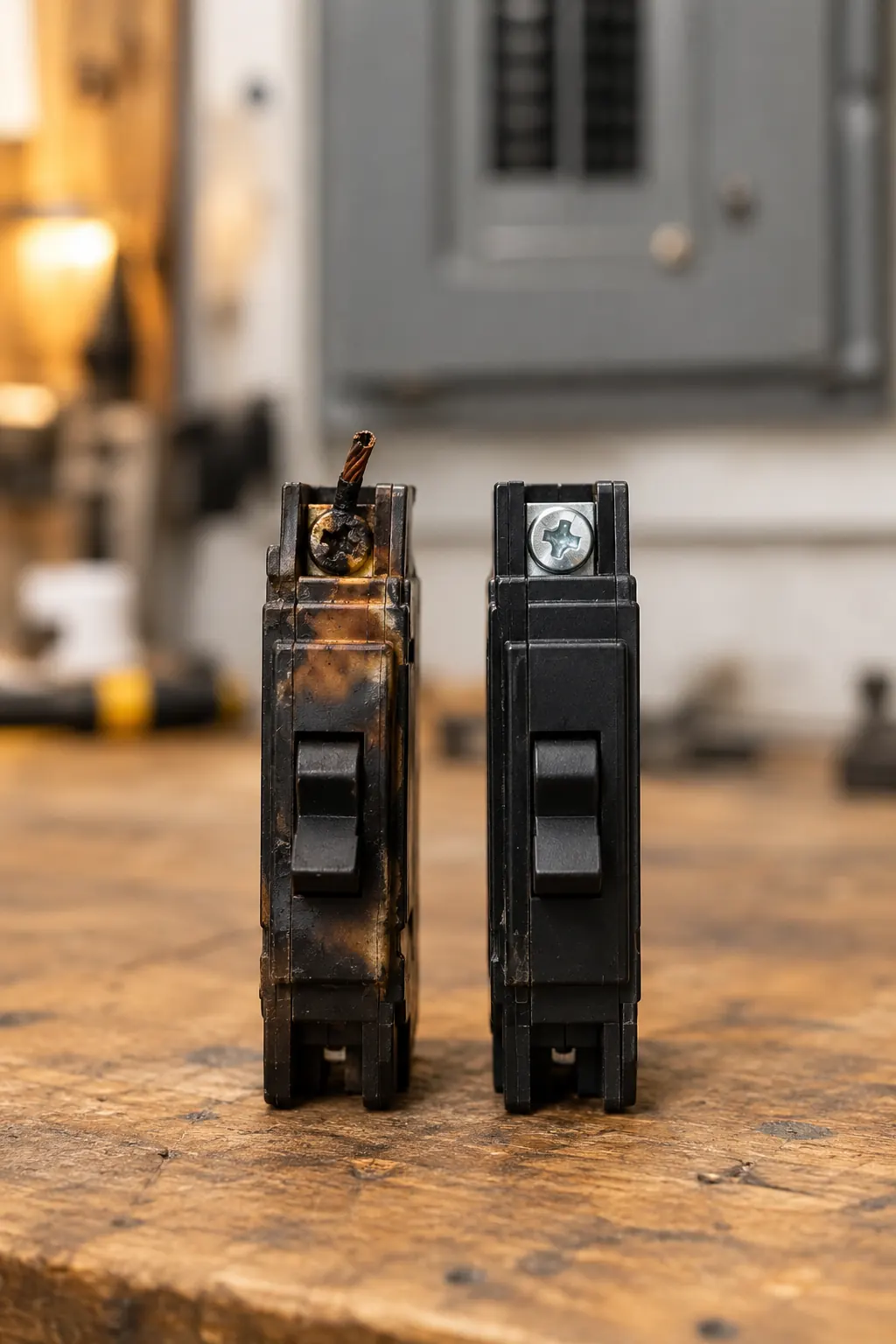
Licensed Electrical Contractor
Licensed and insured in British Columbia.
WorkSafeBC Registered
Active and in good standing.
BBB Accredited
Accredited since 2023.
Canadian family owned, working across British Columbia since 2019.
Get a quoteWhat does replacing a breaker involve, and why do we check the cause first?
Circuit breaker replacement means taking out a failed breaker and putting in a new one that fits your panel and the wire it protects. Before we replace anything, we make sure the breaker is really the problem, because a breaker that trips is often just doing its job. When a breaker keeps tripping or the fault cannot be seen, that check is $165 for a 45-minute diagnostic, which tells you what the problem is and how we will fix it. When the failed breaker is plain to see, the estimate is free.
- We charge $135 an hour for a Red Seal electrician plus a helper, with flat rates on many jobs.
- We pull the permit whenever the job needs one.
Can I replace a circuit breaker myself, or do I need an electrician?
It is not a safe do-it-yourself job, and most people hire a licensed electrician to replace circuit breakers. We replace circuit breakers in homes, rentals and strata buildings across British Columbia. Even with the main breaker switched off, the wires coming into the panel are still live. The breaker is a small part, but it sits inside the panel, and one slip can mean a shock right then or a connection that overheats later.
A breaker swap has to get four things right:
- The new breaker has to be one your panel's label approves. A breaker that clips in is not always one that belongs there.
- The breaker's size has to match the wire it protects. Its whole job is to stop that wire from overheating.
- Every breaker has a printed setting for how tight the screw holding its wire must be. A screw left loose or tightened too far is a fire risk.
- The breaker may not be the problem at all, so it is worth finding the cause before a new one goes in.
The three questions
Circuit breaker replacement cost: what changes the price
We charge breaker work by the time it takes: $135 an hour for a Red Seal electrician plus a helper, with flat rates on many jobs. The estimate is free for work we can see. When a fault has to be traced first, that is $165 for a 45-minute diagnostic, which tells you what the problem is and how we will fix it.
The total depends first on whether the breaker is really the problem. After that, it depends on which type of breaker your panel's label calls for, from a standard breaker to an AFCI, GFCI or dual function one. If heat has damaged the wire or its connection, that adds work. So does anything else we do on the same visit.
You get the quote in writing before any work starts. A quote is priced on what we can see, so if the scope changes, we tell you before we do it, not after.
We come out for a single breaker. When you call 778-708-0451, tell us what the breaker is doing and what it powers. A photo of the label inside your panel door helps too.
Is it the breaker, the circuit or the panel?
A breaker problem sits in one of three places, and each place has a different fix:
- The breaker. The breaker itself has worn out. A breaker cannot be opened up and fixed, only replaced, so circuit breaker repair almost always means fixing the wiring or a loose connection instead.
- The circuit. The breaker is doing its job. It cuts the power because too much is running on that circuit, or because something is wrong with the wiring or with something plugged in. A new breaker will not fix that, so if a new breaker still trips, the problem is on the circuit.
- The panel. Some problems belong to the panel, not one breaker. A faulty main breaker is one. So is a panel with no approved replacement breaker, an older Federal Pioneer Stab-Lok or Zinsco panel, or a fuse box. These point toward replacing the whole panel rather than one breaker.
Among the types of circuit breakers in a home panel, a standard breaker is either single pole or double pole. A single pole breaker runs one 120-volt circuit. A double pole breaker runs a 240-volt circuit for a bigger appliance, such as a range, dryer or heat pump. If your panel has space, we can also handle circuit breaker installation for a new circuit on the same visit.
Replacing an AFCI breaker or a GFCI breaker
An AFCI breaker watches the wiring for sparking, and a GFCI breaker watches for electricity leaking where it should not. Both protect the whole circuit from the panel.
AFCI stands for arc-fault circuit interrupter. A dual function AFCI GFCI breaker does both jobs in one. The electrical code as adopted in BC requires arc-fault protection on many of a home's 125-volt outlet circuits, such as those in bedrooms and living areas. If a circuit needs arc-fault protection under today's code, we tell you before the work starts. We install AFCI and GFCI protection wherever the code requires it. If only one spot needs GFCI protection, fitting a GFCI outlet there can do the job instead. It protects that outlet and any outlets wired after it.
Do you need a permit to replace a breaker, and what if it fails inspection?
Whether a breaker replacement needs an electrical permit depends on the work. When a breaker job needs one, we pull the permit and handle the paperwork. We are there for the inspection. If an inspection does not pass on our work, we put it right, call the inspector back, and we cover the cost.
In Abbotsford, Chilliwack, Mission and Langley, electrical permits come from Technical Safety BC, not the city. Vancouver issues its own through the City.
Before anything is replaced
How to tell if a circuit breaker is bad
A breaker protects the wire behind it. When one wears out or its wire connection works loose, it can run hot, hum or stop staying on.
These are the signs of a bad circuit breaker worth having an electrician look at. Each one can also come from the wiring around the breaker:
- Hot to the touch. A breaker that feels warm at the panel can point to a loose connection or too much running on that circuit.
- Breaker buzzing or humming. A buzz or a steady hum from the panel is a known sign of a loose connection or too much running on the circuit.
- Scorch marks or discolouring. Brown or black marks on the breaker or around its opening in the panel cover mean heat has been there. If you can also smell burning, stop using that circuit and call us.
- Will not stay on. If a breaker switches off again soon after you reset it, it has either worn out or is reacting to a real problem further along the circuit.
- Will not reset at all. If the switch will not click back on, that circuit has no power until the breaker or the problem behind it is fixed.
The estimate for a replacement is free. Tracing a fault on the circuit is electrical troubleshooting and repair work, and that is $165 for a 45-minute diagnostic. At the end of it you know what is wrong and how we will fix it. Some faults can only be found while the power is still on, which is why diagnosis is not left to an apprentice working alone.
If the circuit has no power and the breaker will not come back on, call us for emergency electrical help. We are open 24 hours.
- The breaker protects the wire, not the appliance.
- Current runs along that wire to whatever is plugged in.
- A loose terminal at the breaker can run hot.
Square D, Schneider and Leviton are among the breaker brands we install.
Our circuit breaker replacement process
Before we replace a breaker, we confirm what is causing the problem and explain what needs to be done. If we find anything unexpected, we talk it through with you and get your approval before any extra work begins.
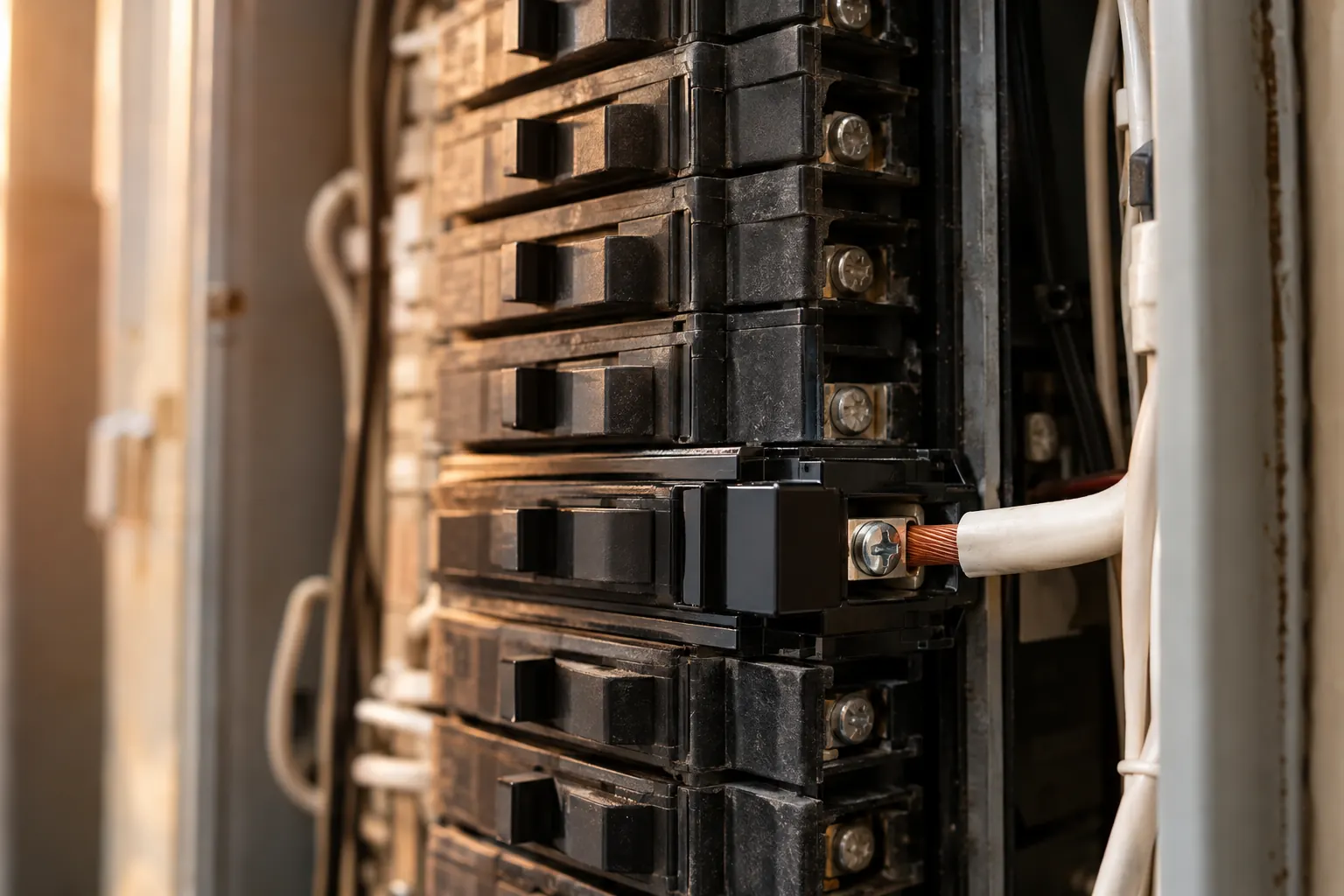
Once you approve the work, we remove the faulty breaker and fit the right replacement for your panel and circuit. Then we test the breaker and the circuit, and show you it works before we leave.
What happens if something is wrong after we leave
If the new breaker, or anything else we worked on, is not doing what it should, call 778-708-0451 and we come back to look at it. When you call, tell us what it is doing, like tripping, running warm or not staying on. That tells us where to start.
If something we installed is not right, we come back.
What our customers say
We hold 4.7 stars from 137 Google reviews, and the two below cover breaker and panel work:
-
Replaced breakers and separated the microwave on a separate plug. This avoided the overload in Deming of light that we were experiencing.
Great work.
Jas and team will ensure renovations are properly wired!
-
I first contacted another company to come fix. I left vm and after a day did not have a response. I then called these guys and within 4 hours Jas was over and fixed my panel! Amazing customer service in an era where the norm seem to be customer LACK OF service! You guys rock!
Frequently asked questions
Any questions? Call 778-708-0451The Wire Guys Electrical Ltd. is a licensed electrical contractor serving Abbotsford, Vancouver, Victoria and communities across the Lower Mainland, Fraser Valley and Greater Victoria, handling residential and commercial electrical work for homeowners, landlords and business owners in British Columbia.
Can a breaker go bad without tripping?
Yes. A worn breaker can stay switched on and never trip, even while it runs hot or hums in the panel. A breaker that no longer trips cannot protect the wire behind it. Either sign is worth having an electrician look at, along with the other signs of a failing breaker.
What does a circuit breaker do, and why not fit a bigger one?
A circuit breaker protects the wire, not the appliance plugged into it. It cuts the power when more electricity flows than that wire can safely carry. The Canadian Electrical Code as adopted in BC limits standard 14-gauge copper wire to a 15-amp breaker and 12-gauge wire to a 20-amp breaker. Putting in a bigger breaker to stop the tripping takes away the protection the wire needs, so it is never the fix.
How long do circuit breakers last?
There is no set number of years, because a breaker's condition matters more than its age. A breaker that runs hot, buzzes, shows scorching or will not stay on should be checked, however old it is. If a home inspector flags a breaker or the panel during a sale, a full electrical safety inspection shows which parts need work and which do not.
How much does it cost to replace a circuit breaker?
There is no single price, because you pay for the time on site plus the breaker your panel calls for. The hourly rate and what changes the total are under how we price a breaker job.
How long does it take to replace a breaker?
The time depends less on the breaker than on what sits around it. The job takes longer when a fault has to be traced first. It also takes longer when heat has damaged the wire or its connection, when more than one breaker or circuit is involved, or when a permit and inspection are needed. The quickest job is a straight swap for the same kind of breaker, once we already know the cause.
Other electrical services we offer
Same licence on every one of them, with the permit and inspection wherever one applies.
Book an electrician for breaker replacement.
Call 778-708-0451 with what the breaker is doing, or ask us for a callback.